


Teaching Then and Now: The Whiplash, the Personalities, and the Question We Don’t Say Out Loud


Today, I complete year 28 in education. WOW! Where has the time gone? When I started teaching in 1997, I knew teaching would be hard.
I knew I would grade papers late at night. I knew I would bring work home. I knew I would deal with difficult students, parent phone calls, changing expectations, and the occasional copier jam that could take down an entire school day.
What I did not know was that almost thirty years later, teaching would become a profession where educators are asked to be experts, therapists, data analysts, behavior specialists, technology troubleshooters, curriculum designers, family counselors, social workers, test-score magicians, and emotional shock absorbers, all while being reminded that we are “appreciated” with a donut in the lounge and a jeans pass.
Don’t get me wrong, I have loved teaching. I love the kids. I love the moments when a student finally understands something. I love the former students who come back years later and say, “You probably don’t remember this, but you helped me.” I have loved coaching, mentoring, laughing with students, building programs, watching kids discover who they are, and knowing that I had a small part in the person they became.
But loving something does not mean it has not exhausted you.
Loving teaching does not mean teaching has not broken pieces of your spirit.
And loving kids does not mean the system has loved teachers back. In 1997, teaching was still teaching. It was not easy, but it felt more focused. You planned lessons. You taught the lesson. You graded the work. You called home. You built relationships. You had professional judgment. You were trusted to know your students, your content, and your classroom. You were looked at as a professional.
Were there problems? Absolutely.
Were there difficult principals? Of course.
Were there parents who thought their child was an angel while the rest of us knew that angel had just thrown a pencil across the room? Yes.
But there was still a sense that teachers were professionals.
Today, that feeling depends greatly on who is leading the building. And let’s be honest: principals can make or break a school.
I have worked with some incredible principals. The kind who trust their teachers. The kind who walk into your room and see the whole picture, not just the one kid off task at the wrong moment. The kind who know when to step in, when to back you up, and when to simply say, “I know this is hard, and I appreciate what you are doing.”
Great principals do not need to control every move you make because they are secure enough to lead.
They listen.
They ask questions.
They trust your experience.
They protect planning time when they can.
They understand that data matters, but so do relationships.
They know that teachers are not robots, and students are not test scores with backpacks.
A great principal makes you want to work harder, not because you are afraid of them, but because you feel respected by them.
That kind of leadership changes everything.
Then there are the other kind.
The ones who want to control every hallway display, every lesson format, every email, every meeting, every conversation, every decision, and somehow every thought you have before you even have it.
The ones who talk about teacher autonomy while handing you a scripted lesson plan.
The ones who say, “You are the expert in the room,” and then turn around and treat you like you need permission to breathe.
The ones who dismiss decades of experience because a new initiative came down from someone who has not taught middle school since flip phones were popular.
The ones who sit in meetings and tell teachers what “should” be happening in classrooms while teachers are silently thinking, Please come teach third period on a Friday and then get back to me.
There is a special kind of exhaustion that comes from being highly educated, deeply experienced, and constantly treated like you cannot be trusted.
Teachers are told to be innovative, but not too innovative.
Creative, but within the pacing guide. Flexible, but aligned. Relationship-focused, but data-driven. Student-centered, but standard-obsessed. Trauma-informed, but also make sure every benchmark score improves by Friday.
It is whiplash.
And the curriculum changes? Good Lord. If you have been in education long enough, you have lived through enough curriculum swings to qualify as a historian.
We have gone from phonics to whole language to balanced literacy to the science of reading.
We have seen textbooks disappear, then come back in digital form, then get replaced by online platforms that require six passwords, three training sessions, and at least one teacher crying quietly near the printer.
We have been told one method is the answer, only to be told a few years later that the answer was actually wrong and now there is a new answer.
Every few years, education repackages an old idea, gives it a new acronym, puts it in a binder, and acts like teachers have never heard of it before. And teachers sit there politely, nodding, highlighting, taking notes, and thinking, We did this in 2004. It just had a different name and fewer slides.
The hard part is not just that curriculum changes. Change can be good.
The hard part is that teachers are rarely given enough time, resources, training, or respect to implement those changes well before the next change arrives. We are told to shift everything, master everything, track everything, document everything, prove everything, and somehow not complain because “it is what is best for kids.”
That phrase has been used to silence teachers far too many times. Because teachers know what is best for kids too. We are with them every day. We see who comes in tired. We see who is hungry. We see who is anxious. We see who is acting out because their life outside school is chaos. We see who needs a push, who needs grace, who needs structure, who needs someone to simply not give up on them.
Teachers know children in a way no spreadsheet ever will. And yet, somehow, the spreadsheet often gets the final word. That is one of the saddest changes I have seen.
Education used to have more room for the human side of teaching. Now, the human side has to fight for space between testing windows, progress monitoring, district mandates, parent emails, and meetings that could have absolutely been an email.
Then comes the pay. The question teachers do not always say out loud, but many of us have asked in the quiet of our cars, our classrooms, or while staring at our bank accounts is this:
Why am I doing all of this for this pay?
It is not because teachers expect to be rich.
No one went into teaching thinking, “This is how I become financially free.”
But there is a difference between knowing you will not be wealthy and feeling like your profession asks for your entire heart, body, mind, evenings, weekends, emotional stability, and bladder control while paying you in a way that forces you to budget like you are solving a word problem from hell.
Teachers are expected to buy supplies, donate time, coach, tutor, sponsor clubs, drive a school bus, attend events, answer emails after hours, and emotionally carry children through things most adults would struggle to process.
Then society says, “But you get summers off.”
Summers off?
You mean the recovery period? You mean the time we use to finally schedule appointments, remember our families, clean out the tote bags in our cars, attend professional development, rewrite curriculum, recover from burnout, and convince ourselves we can do it again in August?
That summer?
The emotional toll of teaching today is real. There are days you walk out of the building and question everything. Days when one parent email can erase ten good moments.
Days when a student’s pain follows you home. Days when a meeting makes you feel smaller than your degree, your experience, and your years of service. Days when the behavior is too much, the expectations are too much, the noise is too much, the paperwork is too much, and the paycheck is not enough. Days when you sit in your car after school, hands on the steering wheel, staring into space like you just survived a natural disaster with bulletin boards.
And then, somehow, the next morning, you go back.
You go back because the kids still need you. You go back because there is a student who only smiles for you. You go back because someone has to see the quiet kid.
You go back because you know the angry kid is often the hurt kid. You go back because teaching is not just what you do. For many of us, it became part of who we are.
And that is what makes it so complicated.
Teaching is beautiful.
Teaching is brutal.
Teaching is meaningful.
Teaching is underpaid.
Teaching is hilarious.
Teaching is heartbreaking.
Teaching is a calling, but it should never have been used as an excuse to underpay, overwork, and emotionally drain people who care.
The teachers I have known over the years are some of the most creative, resilient, sarcastic, exhausted, compassionate, and powerful people on the planet.
They can manage a classroom, rewrite a lesson in five minutes, decode a student’s mood from one facial expression, eat lunch in seven minutes, fix a Chromebook, find a missing assignment from October, de-escalate a child, comfort a coworker, and still remember that someone is allergic to peanuts.
That is not “just teaching.”
That is professional magic.
But magic gets tired too.
After all these years, I still believe in the heart of education.
I still believe in students.
I still believe in the teachers who show up every day with coffee, dry shampoo, sarcasm, compassion, and a lesson plan that may or may not survive first period.
But I also believe we have to tell the truth.
Teaching has changed. Teachers are carrying more than ever.
The profession has become heavier, louder, more political, more controlled, more scrutinized, and in many ways, more heartbreaking.
And yet, in the middle of all of it, teachers still change lives.
Not because of the newest curriculum.
Not because of the latest acronym.
Not because of the data wall.
Not because of the scripted lesson.
But because a good teacher can still look at a child and say, “I see you. I believe in you. You matter.”
That has always been the heart of teaching. From 1997 to now, that part has not changed.
But everything around it sure has.
And honestly?
That is why so many teachers are tired.
Not because they stopped caring.
But because they never stopped.
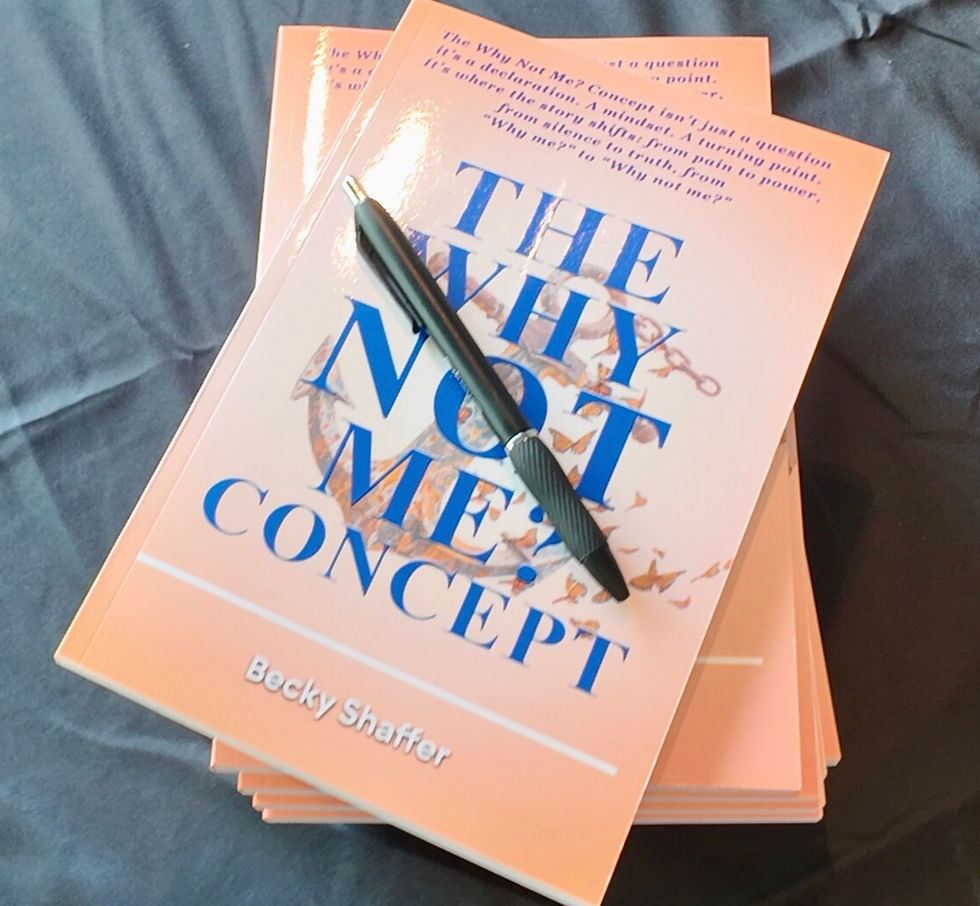
Becky Shaffer/ Educator/ Author/ Speaker


Comments