


The Chains We Choose: How Holding Onto Anger Tethers Us to the Past

Updated: Jul 9, 2025

Let’s be real: sometimes anger feels justified. Righteous, even. You were hurt and lied to. Betrayed. Ghosted. Or maybe someone took advantage of your kindness one too many times. And you swore—this time, you wouldn’t let it go. You deserved to be mad.
And maybe you do.
But here’s the hard truth: anger and resentment don’t punish the other person. They punish you. While they go on with their life—posting filtered selfies, starting new relationships, possibly forgetting your favorite coffee order—you’re still carrying the weight of their wrongdoing like an emotional backpack filled with bricks.
Every time you replay the conversation, the betrayal, the disappointment—it’s like you’ve chained yourself to the moment it all went wrong. And the longer you carry it, the heavier it becomes. It doesn’t protect you. It poisons you.
You deserve better than that.
Anger doesn’t move you forward. It anchors you to a version of yourself you’ve outgrown. Anger can feel like control. Like power. Like the one thing you get to own when everything else feels taken from you. But the longer you hold onto it, the more it becomes a mirror, not of the person who hurt you, but of the version of you who was hurt and never got to heal.
It keeps you replaying the same moment, defending the same wound, justifying the same pain. And that might have served you once. Maybe it was a shield. A boundary. A way to survive. But now? It’s a chain.
You’ve grown. You’ve changed. You’re not the same version of yourself who was ghosted, lied to, dismissed, or betrayed. You deserve to walk in the freedom of who you are now, not the version of you that needed to clench their fists just to feel safe.
Letting go of anger isn’t weakness. It’s wisdom. It says: I refuse to let what hurt me define what heals me. Seriously, though, holding onto anger is like binge-watching the worst episode of your life on repeat, hoping the ending will change. Spoiler: it won’t. That person still ghosted you, your ex still forgot your birthday and your dog’s name, and Karen from HR still took credit for your idea in that meeting two years ago. (Yes, we all have a Karen.)
But here’s the twist — healing doesn’t require you to pretend it didn’t happen. It just asks that you stop starring in the sequel. Let them live in the reruns. You’ve got better things to do. Like, move on. Maybe take a nap and unfollow them while you’re at it.
Because wisdom looks like saying: I’m done carrying your nonsense like it’s a designer bag. I’m healing now. And no, you can’t come back just because Mercury’s in retrograde.
And resentment? That’s just a delayed heartbreak dressed in armor. It keeps you from fully healing, from trusting again, from showing up as the you that isn’t constantly looking over her shoulder, waiting for another betrayal.
Letting go doesn’t mean saying, “It was okay.” It means saying, “It happened. It hurt. But it doesn’t get to define me anymore.” Big difference, right? You’re not handing out emotional participation trophies. You’re not pretending betrayal was just “a learning opportunity” while nervously laughing through the pain like you're at a bad open mic night for trauma.
Letting go is not pretending you’re fine. It’s not sending that one last long paragraph (even though it was beautifully written and you did edit it three times). It’s not forgiving so fast that you skip your healing.
It’s standing in your truth and saying: Yes, that sucked. Yes, I deserved better. And no, you don’t get lifetime access to my mind just because you once made me a playlist. Because let’s be honest — the emotional bar was in hell, and somehow they still tripped over it. Sure, they sent a few songs with meaningful lyrics. Maybe even one with your name in it. Big whoop. That doesn’t mean they get to haunt your thoughts like some nostalgic Spotify ghost every time you hear an acoustic guitar.
Letting go doesn’t erase the good moments — it just reminds you not to build a life around crumbs when you deserve the whole damn bakery.
It’s choosing peace over pettiness. (Okay, mostly — we still might roll our eyes when their name comes up.)
It’s closing the door not with bitterness, but with boundaries. Not because you stopped caring, but because you started caring more about yourself.
So go ahead. Skip their song. Delete the playlist. Or keep it and rename it “Red Flags in D Minor.”
Whatever helps you remember, your healing is the real soundtrack now.
You get to acknowledge the wound without living in it.
Because healing isn’t pretending it didn’t happen. It’s deciding that it doesn’t control the next chapter.
And if anyone asks, yes—this chapter is called: “Unbothered, Moisturized, Emotionally Evolved, and Maybe Still Petty… but healing.”
You don’t need to carry that pain to prove it mattered. You’re allowed to set it down. You’re allowed to be free.
And freedom? That’s where your peace lives.
So ask yourself: what would it look like to stop dragging the past behind you like a shadow? What if the next chapter of your life doesn’t need that baggage?
Maybe today’s the day you let go—not for them, but for you.
It’s time to write the new chapter. One where you’re not the side character in someone else’s chaos. One where peace isn't a plot twist—it’s the starting point. One where healing is loud, laughter is real, and love (the good kind) shows up and stays.
You’ve turned the page before. You can do it again.
And this time? You hold the pen.
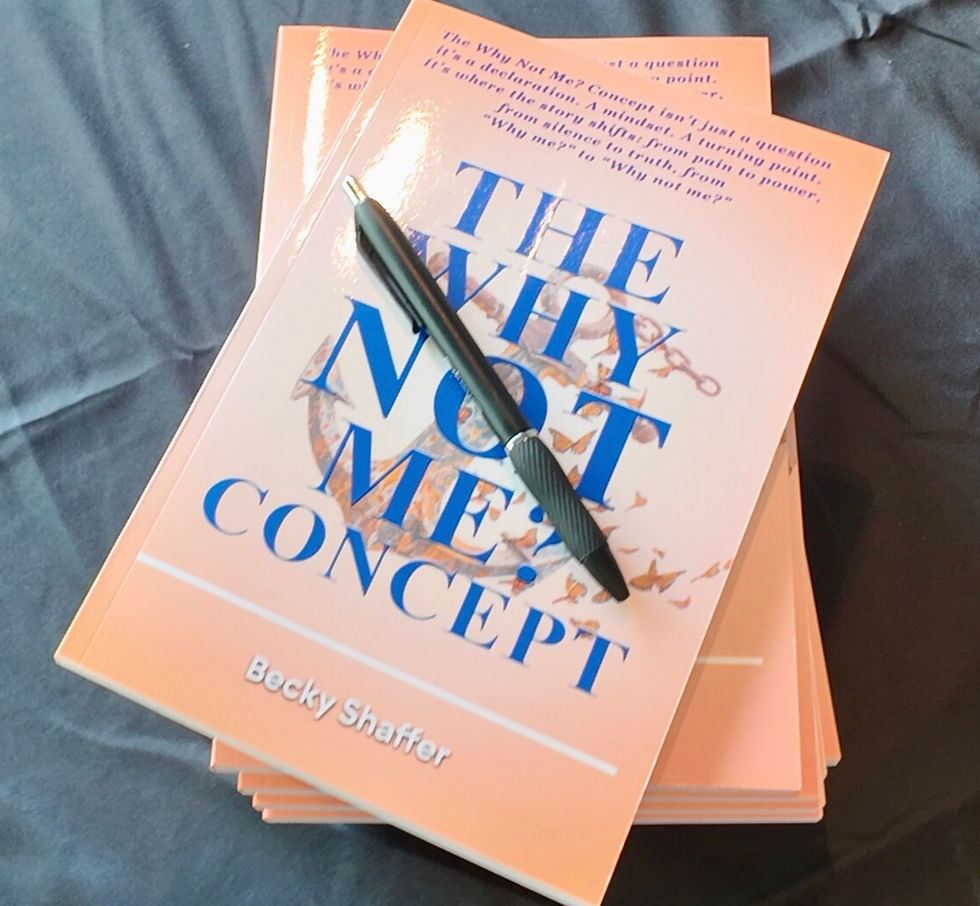
Becky Shaffer


Comments